*To catch up read my first and second installments, 1) here and 2) here.
II
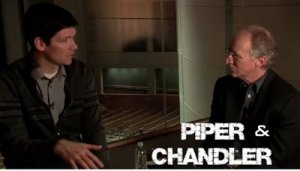
 This is my second installment (well third really) on Matt Chandler’s and John Piper’s ‘two-wills in God theology’. My last post on this sought to introduce us to the way that John Piper, in particular, and Chandler otherwise, understand a concept that they both articulate as ‘The TwoWills of God’. I registered my concern in that last post about where this approach leads, because of where it comes from; and because of what it implies about God’s nature, and how he relates to his creation (us) in what has been called salvation history. This post will briefly sketch the aspect of where two wills in God theology came from; my next and last post in this mini-series will detail what the implications are of this approach (for Christology, soteriology [study of salvation], etc.), and in this detailing I will offer what I think is a corrective---which of course is what we advocate for as Evangelical Calvinists.
The history of two-wills in God theology can be seen given definition through the thought processes of a medieval theologian named William of Ockham. He believed, in a nutshell, that God was one way in eternity (God’s so called ‘absolute will’), and another way in time-space salvation history (God’s so called ‘ordained will’). What this does is introduce a wedge between the God of eternity and the God of spacio-temporal time; meaning that the God we see revealed in Jesus Christ could potentially be different than the God behind Jesus back up in eternity (understand that I am speaking in oversimplified ways and rather crudely)---or, there is no necessary link between how God acts in eternity, and how God acts in time. The result of this is to place a rupture into the very being of God. Here is how Steven Ozment summarizes Ockham’s view (and he also quotes a bit of Ockham for us); we will quote this at some length:
This is my second installment (well third really) on Matt Chandler’s and John Piper’s ‘two-wills in God theology’. My last post on this sought to introduce us to the way that John Piper, in particular, and Chandler otherwise, understand a concept that they both articulate as ‘The TwoWills of God’. I registered my concern in that last post about where this approach leads, because of where it comes from; and because of what it implies about God’s nature, and how he relates to his creation (us) in what has been called salvation history. This post will briefly sketch the aspect of where two wills in God theology came from; my next and last post in this mini-series will detail what the implications are of this approach (for Christology, soteriology [study of salvation], etc.), and in this detailing I will offer what I think is a corrective---which of course is what we advocate for as Evangelical Calvinists.
The history of two-wills in God theology can be seen given definition through the thought processes of a medieval theologian named William of Ockham. He believed, in a nutshell, that God was one way in eternity (God’s so called ‘absolute will’), and another way in time-space salvation history (God’s so called ‘ordained will’). What this does is introduce a wedge between the God of eternity and the God of spacio-temporal time; meaning that the God we see revealed in Jesus Christ could potentially be different than the God behind Jesus back up in eternity (understand that I am speaking in oversimplified ways and rather crudely)---or, there is no necessary link between how God acts in eternity, and how God acts in time. The result of this is to place a rupture into the very being of God. Here is how Steven Ozment summarizes Ockham’s view (and he also quotes a bit of Ockham for us); we will quote this at some length:
Ockham’s reputation as a revolutionary theological thinker has resulted from the extremes to which he went to establish the contingent character of churches, priests, sacraments, and habits of grace. He drew on two traditional sources. The first was Augustine’s teaching that the church on earth was permixta, that is, that some who appear to be saints may not be, and some who appear not to be saints may in fact be so, for what is primary and crucial in salvation is never present grace and righteousness, but the gift of perseverance, which God gives only the elect known to him. Ockham’s second source was the distinction between the absolute and ordained powers of God, the most basic of Ockham’s theological tools. Ockham understood this critical distinction as follows:
Sometimes we mean by God’s power those things which he does according to laws he himself has ordained and instituted. These things he is said to do by ordained power [de potential ordinata]. But sometimes God’s power is taken to mean his ability to do anything that does not involve a contradiction, regardless of whether or not he has ordained that he would do it. For God can do many things that he does not choose to do. . . . The things he is said to be able to do by his absolute power [de potential absoluta]. [Quodlibeta VI, q. 1, cited by Dettloff, Die Entwicklung der Akzeptations- unde Verdienstlehre, p. 282, and Courtenay, “Nominalism and Late Medieval Religion,” p. 40.]
Ockham seemed to delight in demonstrating the contingency of God’s ordained power—what God had actually chosen to do in time—by contrasting it with his absolute power, the infinite possibilities open to him in eternity. According to his absolute power, God could have chosen to save people in ways that seem absurd and even blasphemous. For example, he could have incarnated himself in a stone or an ass rather than in a man, or could have required that he be hated rather than loved as the condition of salvation. . . .[1]
 In order to keep this brief enough I will not elaborate too much, but let me give some reasons why I think this is important to know; and also for whom I am presenting this in the main:
1) I am introducing this for folks who have never had a Reformation Theology class in seminary, for example. So this is intended to provide exposure for all of those who have been unexposed heretofore.
2) My hope is that because of said exposure, the reader will understand that there is something more going on when they hear Piper and Chandler articulate two wills in God theology. In other words, the way that both Piper and Chandler present this, to the uninformed; the parishioner will walk away thinking that what Chandler just said about two wills in God is simply Gospel biblical truth without reservation or anyway to critically consider this. So my goal is rather minimal by reproducing Ozment’s thought for you; my goal is simply to alert the attentive reader and thinker that there is something more than ‘biblical truth’ going on in the in-formation of Piper’s and Chandler’s view on this particular topic.
3) I want the read to understand that there is a particular problem associated with thinking in these kind of Nominalist ways (which is what the philosophy is called that Ockham articulates) about the nature of God. As I noted earlier, it creates a potential schism (indeed necessary) between the God of eternity and the God of time revealed in Jesus Christ; so as my favorite theologian says (along with Barth before him), we end up ‘with a god behind the back of Jesus’ who is not necessarily the same God we see revealed in Jesus (so when Jesus says in John 14 that ‘when you see me you see the Father’, that may or may not be true according to the implications and logic associated with a two-wills in God theology).
Conclusion
My next and final post in this series will expand on the problems associated with this approach; elaborating upon my parenthetical point in point three in the aforementioned. I will notice how this approach, which is purported by both Piper and Chandler to resolve some apparent tensions in scripture; instead exacerbate things in scripture by undercutting the most important point and touchstone we work from as Christians---that is what has been called a Theology Proper or Doctrine of God. If we get this point wrong---e.g. who God is---then the rest of our theological thinking and biblical interpreting will be found to be built on sandy beaches and not the rocky jetty that will stand under the most tumultuous theological storm waves one could fathom.
[1] Steven Ozment, The Age of Reform 1250-1550: An Intellectual And Religious History Of Late Medieval And Reformation Europe, (New Haven and London: Yale University Press, 1980), 18.